July 6, 2010

Peanut Butter Latte


You may, or may not, have noticed that I try and come up with clever titles for my posts. Why? Good question. I really don't have a good answer to it, however. I suppose I like to maintain some pretense of cleverness. A facade I'm in the process of tearing down right now, but I digress.

The fact is, there is not much I can think to say about this, other than the truth. I have wondered, for some time, how peanut butter would work in a latte.

It's thick, but not really more so than mocha or caramel sauce, both of which mix just fine in espresso and steamed milk.

It's not sweet like the usual syrups and sauces, however. At least, not very; most peanut butter is sweetened a tad.

Finally, I had the chance to try this concoction, which had previously only existed in my imagination. My new place of employment, Seattle's Best Coffee, has packs of peanut butter, lightly sweetened with honey, which are kept on hand for pretzels, bagels, and whatever other starches someone might fancy applying it to.

So my boss and I steamed up some whole milk. Or rather, she did. I should note that she did quite a nice job of it too. The texture was rich and thick, stretched to the point of a creamy consistency. The espresso was, well, what it is when it's pulled from an automatic machine. It's consistent, and quality. Those ingredients, by themselves, make a quality drink. I know, because I've had the combination.

But this time, there was peanut butter. The result, sadly, was neither blissful nor catastrophic. It added nothing to the texture, surprisingly. As far as flavor goes, little was gained. A slight nuttiness -- peanuttiness, you might even say.

Double the peanut butter, and perhaps a separate packet of honey, and the result may have been more noteworthy. Perhaps, another day.

Coffee, Black Coffee


James Bond may be the ultimate image of modern masculinity. While his sports car driving, rampant womanizing, world saving ways may have something to do with this, I choose to believe that it begins, like any day should, with breakfast.

For Bond, this is not a complicated matter. He breaks his fast with three scrambled eggs, served over one piece of lightly buttered toast. Simple, and yes, very British.

But while Bond's countrymen are most famous for drinking tea, the superspy eschews the beverage. In fact, he outright loathes it.

Instead, Bond starts every day with two cups of strong, black coffee, prepared in a Chemex brewer.

Of course, this is not to say that you ought to drink your coffee black as well. You can add all the sweetener (real or artificial) or cream(er) you like. Really, it's up to you. It is your cup of coffee, after all. Take ownership of it, prepare it how you like, and enjoy it.

No, you don't need to be like James Bond. But aspiring to perfection never hurt.

June 27, 2010

Ice, Ice Baby


Among the things about which one can be entirely certain, perhaps none are more steadfast than the this: Eastern Kansas summers will be miserable. You will not just suffer through the heat, the humidity. You will wear it like the some sweat-logged wool cardigan.

But summer is hot. Got it. Revolutionary stuff, really. So is coffee. Typically, it's really hot. Brewed somewhere around 200 degrees, hot. Milk based drinks are cooler by about 50 degrees, but still uncomfortable when the heat index is about as high.

Luckily, coffee consumers have an abundance of means with which to fix this problem.

They could do as I do, and simply drink the hot coffee, grumbling all the while about kids these days.

But let's assume that most people don't share my militant affection for scalding-hot coffee. Let's assume that they want something cold.

Coffee bars, of course, offer all manner of cold drinks. It's simply a matter of pulling however many shots are required, then adding milk (or water) and ice. Ta da.

Unfortunately, iced coffee is not so easily prepared. Well, not so easily prepared, if you have any interest in doing it right. You can brew double strength coffee, then bomb it with ice. You can do that, but you really shouldn't. Coffee doesn't like that sort of system shock. To get revenge, it gets all acrid and bitter. Not quite the refreshing drink you wanted.

No, if you want to drink coffee cold, it ought to be brewed cold. The technical aspects of how this goes down are either a) unimportant or b) a future post, so I won't address them here. The more pertinent facts are that the resulting product is sweet, dense, smooth and refreshing. All of these things, no doubt, are worth seeking when you're wearing the weather.

Most places that cold brew their coffee (the name Toddy will probably be invoked somewhere) like to advertise the fact. And why not, the difference really is remarkable? Thus, if a good iced coffee is the goal, it ought to be procured from a place that promises to do it right. Thankfully, that's becoming more the rule than the exception.

June 23, 2010

Milk: It does espresso good


Well, that was something of a longer hiatus than I had planned. In truth, I hadn't really planned any time off at all. But various health problems (stupid pancreas) and other writing efforts (stupid fiction, being damn hard to cobble together) conspired to leave this blog in something of a vegetative state.

Thus, a brief update. My pancreas is fine. Because of my increased ability to digest things properly, milk no longer seems to be a bother. This is better news than I can put in to words. Because, once again, I can enjoy the velvety perfection that is embodied in milk foam. Perfection, that is, so long is it's topping a cappuccino.

I've talked about steaming milk before. And I'm sure that I'll talk about it again, as it's that important. But, just for a moment, let me discuss the types of milk available for your espresso beverages, and which are best.

There is, of course, skim, which some might argue is not really milk at all, but rather a watery emulsion of lactose, whey and casein. Some people might say that, but I would not. Skim milk is still milk, in the same way that a steak with the fat trimmed off is still a steak. Unfortunatley, that's about all the nice things I have to say about skim milk. Its lack of fat means two things: First, that even when steamed, it lacks the body of fattier dairy; And second, that it lacks the flavor.

The next step up on the fat-o-meter is 2%, which many coffee bars don't offer. The theory, I suppose, is that skim is for the calorie watchers, whole is for everyone else. Half & half, then, is for the militant. Despite that fact, king of coffee, Starbucks, uses 2% as its standard for espresso beverages. As you would expect, 2% offers more flavor and texture than skim, but less than whole. The question, then, is how much difference is there?

Not an insignificant amount. A simple slurp and swirl is enough for the moderately learned palate to differentiate between the three options.

Whole, predictably enough, tends to be the agreed upon best choice in the industry. The old culinary truism that fat equals flavor holds true in this regard. The fat really does enhance the espresso, as well as provide a delicious aroma. When you're drinking from a saucer or lidless cup (which is to be recommended) this fact is not to be underestimated. But it really is the texture that makes the biggest difference. Milk is steamed in order to stretch and aerate it, to create a pillowy mass of infinitesimal microfoam. Less fatty dairy simply does not have the structure to hold as luscious a structure as whole milk does.

But there is the matter of diminishing returns. While fat does equal better flavor and texture, too much fat is still possible. I would argue that a breve beverage (made with half&half) doesn't quite cross that line, but it certainly does toe it. The body is heavy and rich, almost approaching cheese territory. The lack of lactose also means, not surprisingly, that the beverage is less sweet. Thus, for a breve beverage to be best, it requires a stronger (or simply more) espresso to cut through the fat and add a touch of sweet.

And heavy cream? I don't know, and I don't want to.

May 21, 2010

Quick and, well, not awful


Coffee is not a luxury item. Not for some caffeine addicts anyway. Coffee is right up there with food, air and water on a "things needed to survive list". As such, it is impertive that coffee be available to such persons at all times. Unfortunately, this sometimes means sipping stagnant brews, sitting for god only knows how long on gas station hot plates.


But it doesn't have to be this way. The addict can get their fix from several reputable places, no matter the situation.


First, there are drive thru restaurants. McDonalds has made quite the fuss about their coffee initiative. To the giant's credit, they do use 100% arabica beans, producing a non offensive cup. But if you're looking for strength or flavor, you'll be sadly dissapointed. The brew, in my expereince, has always been flat and bland.


A better drive thru option is Dunkin Donuts. The chain first introduced Americans to decent coffee over fifty years ago. Ever since, they've used 100% arabica beans, and ground and brewed them fresh. Again, if you're looking for a nuanced cup, you won't find it here. But even a discerning palate will be pleased enough with Dunkin's reasonable quality.


Although it isn't available quite yet, Starbucks will be moving subsidiary Seattle's Best Coffee in to Burger Kings everywhere. Once that takes place, BK will usurp Dunkin Donuts as my drive thru coffee option.


Of course, there are times where even stopping at a drive thru seems like too much effort. You're in a hurry, road tripping or whatever, and can only stop for gas. Thus you're left with gas station coffee. But you needn't dispair. Some chains actually keep their coffee brewed fresh, and contained in actual pots, thus ensuring that the brew is at least hot. Quiktrip is the best such option, if you're in an area where they exist. They, like the previously mentioned options, only use arabica beans, and generally keep their pots fresh. But no matter where you live, there is probably at least one gas station which can be counted on to provide a decent product. Once you find such a place, make a mental note of it.


I all of these options aren't available, Starbucks VIA and free hot water from gas stations works in a pinch.


Finally, whatever youo do, stay far, far away from the machine poured "cappuccinos" offered at gas stations. Please, for your sake and mine.


May 14, 2010

Any way you want it


I will not say very many nice things about frappuccinos, ever, so this post is somewhat out of character. That said, although the snob in me still finds them abominable affronts to coffee, I appreciate their improvement.

Are the great? No. Good. No. Something I would drink if starving and parched, near to the point of death? Still, no. 

But better is better, and credit should be given where it's due. 

Once upon a time, Starbucks used to make frappuccinos with a prepared, syrupy mix, which was concocted the night before. The resulting product separated quickly and easily, and tasted more of candy than anything else. Still, the sugar bomb had its devotees, as sugar bombs will. Perhaps those die hards will not like the new method. But I think that most will.

It isn't anything too revolutionary. In fact, it's the sort of thing that prompts you to wonder why it wasn't done sooner. 

Instead of using the pre-mixed base, Starbucks now constructs their frappuccinos with instant coffee or espresso, and milk. Whatever syrups you desire are then added, along with ice, and the whole thing is blended together. 

This allows for customers to more fully suite the beverage to their tastes, first of all. It also allows for decaf and soy frappuccinos, for those who want/need them. The freshness factor is also worth noting. 

From an employee perspective, the new method is superior as well. There are no mixes to make, and thus no mixes to throw out either. Thus there is less waste, and less dishes. Both are certainly good things. Milk also seems to blend with the ice more smoothly than the syrupy mix did, which makes the drink much easier to pore. 

So while I still wouldn't drink them, I appreciate the fact that others do enjoy their coffee (or sometimes not coffee)/milkshake things. We have to hook the kids somehow, after all.  

May 12, 2010

Wired


There are students out there much more dedicated than I. Truth be told, most students are probably more dedicated than me. After all, I'm the guy blogging about coffee during finals week. Not exactly academic stuff. But hey, you have to prioritize. 

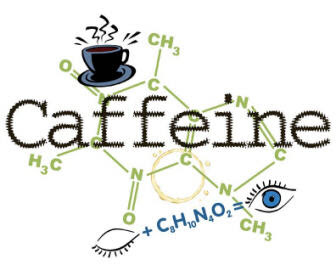
Regardless, this being finals week, many undoubtedly plan on staying up to obscene hours of the night/morning in order to cram as much information in to their brain as will fit. A great plan. In order to do this, said individuals will ingest caffeine by the hundreds of milligrams. 

But what will they use as a source? Some will rely on soda, or energy drinks. Which is fine, I suppose, if you're in junior high. Those who have grown out of their need for sugar bombs will turn to coffee. 

But even within that category, there are ways to optimize caffeine consumption. Plain ol' black coffee works great, especially when consumed in enough quantities. But the amount of water that comes along with the caffeine might have someone running to the bathroom too often. 

If that's the case, consider espresso. Espresso is simply concentrated coffee, thus, by volume, it has more caffeine. One could easily shoot several shots down in a matter of moments. Of course, you could also enjoy the drink -- and probably should -- but that's not the point in this scenario.

Some gas stations now have coffee with added synthetic caffeine. If you don't care about the taste and have a death wish, this might be worth looking into. 

My best tip correlates nicely with an earlier post: Basically, that fat is your friend. You see, caffeine is fat-soluble. That means that, in order to absorb and utilize it fully, your body needs dietary fat. So the old trope about drinking coffee on an empty stomach being more effective? Wrong. To get wired more effectively, drink your coffee with or immediately after consuming food. Adding half & half or heavy cream to your coffee is an even easier route to take. But again, I must recommend that you lay off the sugar. Although there are a myriad of great reasons why you should, the one that's most relevant to this discussion is that sugar prompts a spike, and subsequent precipitous drop in energy levels. Despite what you've probably heard, caffeine is a much more stable source of energy, due to its blood sugar stabilizing properties.